
This separation is essential for sustaining a recovery path and guaranteeing that the reporting of the system’s state remains accurate. Once the immutable code is working, the RoT’s code performs a cryptographic hash (measurement) of the next component to be loaded. This is usually the system’s firmware or bootloader (e.g., BIOS/UEFI).

They also be positive that cryptographic operations happen inside a trusted surroundings https://forestcitymotorhomes.net/how-often-should-you-service-your-rv-for-optimal-performance/, preventing sensitive knowledge from being exposed in system memory. A hardware root of belief strengthens cryptographic techniques by defending the place to begin of belief. It can generate, store, or protect personal keys so they are more durable to extract than keys saved solely in software program. A Root of Belief, generally shortened to RoT, is the foundational safety part of a connected gadget. We design and integrate hardware root-of-trust architectures for protection — TPM-anchored gadget id, HSM-backed PKI, measured boot, and attestation-gated classified-network access.
- A sturdy root of trust consists of identity and cryptographic keys rooted within the hardware of a device.
- It makes assaults similar to firmware tampering, key theft, and system spoofing more durable to carry out at scale.
- Adopting miniOrange’s IAM solutions means shifting to a layered defense system and constructing a resilient basis towards essentially the most sophisticated cyber risks, including Root of Belief attacks.
- The RoT ensures system integrity by constructing a verifiable chain of belief through the startup course of.
Measurement
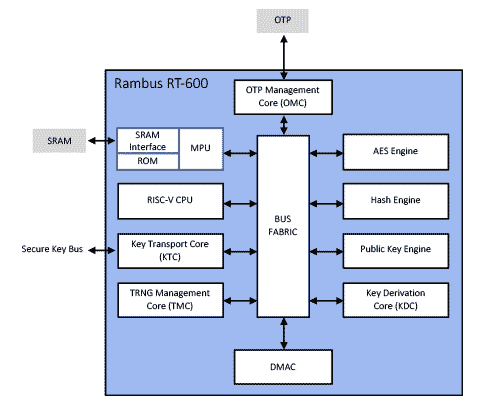
Producers must integrate particular chips and develop complicated firmware to handle the RoT lifecycle. Moreover, if the RoT itself is flawed or improperly manufactured, the compromise is impossible to remediate with out replacing the hardware. This permanence makes the initial design and validation of RoT parts critically necessary. It signifies the last word source of trust in a system’s security structure. Simply as a ship relies on its anchor to remain positioned, a secure computing system relies on the Trust Anchor to confirm its state.
If the hashes match, the RoT executes the verified part, passing belief to it. If the hashes don’t match, the RoT stops the boot course of, signaling a compromise. This failure state prevents the system from loading a doubtlessly malicious surroundings.
It relies on the TPM’s ability to securely measure the platform’s state, generate signed attestation data, and permit remote entities to confirm the integrity and authenticity of that data. The use of attestation enhances safety in scenarios similar to secure boot, distant gadget administration, and secure communication between units. The Foundation of Belief is the inspiration of a secure system, offering a starting point for establishing trust. It is usually a hardware-based part or set of parts which are inherently trusted. The RoT ensures the integrity and security of a system from the beginning of the boot process.
Nrf52840dk Hardware Setup
Therefore, no ancestor entity can present a trustable attestation (in digest or otherwise) for the Root-of-Trust’s preliminary code and data state. A hardware root of belief often begins with immutable or tightly controlled code saved in silicon, secure ROM, a TPM, secure element, HSM, or trusted execution surroundings. When a device powers on, this trusted component verifies the next stage of code earlier than allowing it to run. The Root-of-Trust is used to validate all the additional pieces of software that load on the system and is the primary foundational link in a Chain-of-Trust that successfully boots an embedded system. The Root-of-Trust can’t be tampered with, which then permits the system to detect if software loaded later can be trusted or not. Builders ought to be on the lookout for microcontroller solutions which have a hardware-based Root-of-Trust constructed into them.
Provide Chain Assaults

It offers secure storage for cryptographic keys, helps key era and administration, permits remote attestation, and ensures the integrity of the system via safe boot processes. The RoT can present essential trusted capabilities similar to trusted boot, cryptography, attestation and secure storage. One of probably the most basic uses of a RoT is to maintain private crypto keys (encrypted data) confidential, protected by hardware mechanisms and away from the system software program that is simpler to hack.
You also install the kernel on the hardware board from that listing. For accessibility, we will use a regular microcontroller on this demo somewhat than an precise hardware root of trust; that mentioned, the principles in this demo apply readily to any HWRoT. The Tock kernel is compiled specifically for a specific hardware gadget,termed a board.
Separate key lifecycle orchestration, hardware safety, cryptographic operations, workload authorization, and application information coverage. Hardware can have design defects, facet channels, fault-injection paths, weak random technology, debug interfaces, compromised firmware, or counterfeit elements. A root can show id or measured state with out proving bodily location, current behavior, absence of malware after measurement, or secure utility logic. When we energy on an embedded system and begin the boot process, we want to ensure that our embedded system boots with reliable software program. The downside that many systems face is determining if the primary code that runs on the system is, in fact, their code and authentic. Of course, the system could presumably be booting successfully, but what happens if some piece of malware is the first thing that runs, and the the rest of the software program is trusting that code?